

Blog
Building Automation System Maintenance: What Happens After the Project Is Finished?
Published on: September 22, 2026
Building automation system maintenance keeps controls matched to how your building runs today. See what changes, what support covers and when to call Kimco.
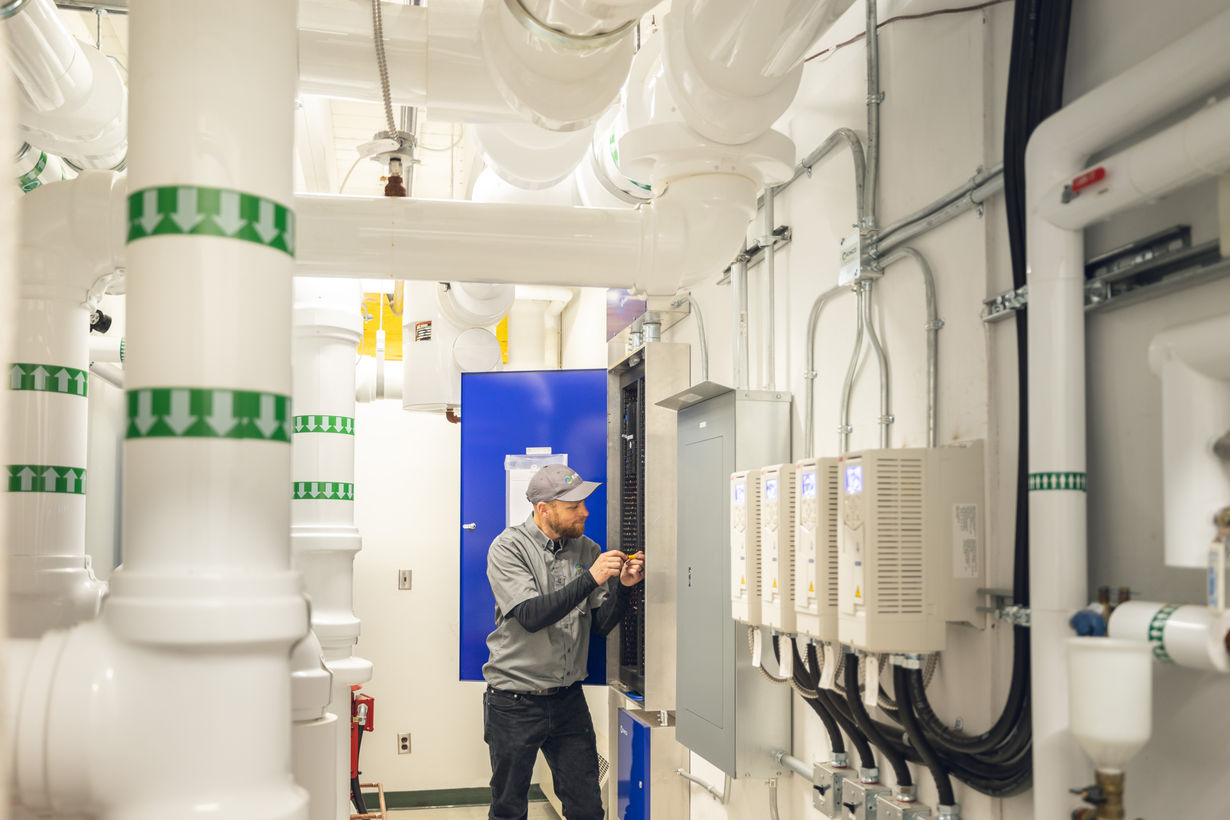
A Kimco technician works inside a building controls panel. Ongoing support keeps a building automation system matched to how the building runs today.
By Narini Dzimwasha, Reception/ Admin & Marketing Support at Kimco | September 2026
Building automation system maintenance starts the day the installation ends, because the building keeps changing. Spaces get renovated, equipment gets replaced, schedules shift, and the way people use the building can look completely different a few years down the road.
When that happens, the controls managing those systems need to change, too. Sometimes that means adjusting a schedule or setpoint. Other times it means updating programming, adding new equipment or troubleshooting an issue that wasn't there when the system was first installed.
Quick Answer: A building automation system (BAS) needs ongoing support to keep up with a changing building.
- What it is: adjusting, updating and troubleshooting controls after the original install.Why it matters: renovations, new equipment and new schedules change what the controls need to do.
- What you can do now: review trends and alarms for anything running outside normal patterns.
- When to call a professional: programming changes, new equipment or recurring faults.
- Cost notes: scope depends on system size, age and how much the building has changed.
Why Building Controls Need Attention After Installation
Building controls are programmed for how a building runs on the day they're commissioned. A renovated floor, a new rooftop unit or a tenant with different hours can leave that programming out of step with reality. Left alone, the system keeps following instructions written for a building that no longer exists, which shows up as comfort complaints, equipment running when nobody is there, or alarms that operators start to ignore.
What Ongoing BAS Support Covers
Ongoing BAS support matches the controls to whatever changed in the building. The table below shows common changes and the controls work that usually follows:
Trends and Alarms to Spot Changes Early
Trends, alarms and other data from a building automation system show building operators how their systems are performing and where operation has drifted. A zone that heats earlier every week, or a fan that never shuts off overnight, often appears in trend data before anyone complains.
Why a Technician Who Knows Your Building Matters
A technician who knows a building's systems and history starts every service call with more context. They know which changes were made last year, which equipment has a track record, and how the original sequences were written. That familiarity shortens troubleshooting and makes each adjustment fit the whole system instead of patching one symptom.
When to Call a Building Automation Technician
- A space is being renovated, repurposed or leased to a new tenant.
- Equipment is being replaced or added to the system.
- The same alarm keeps coming back, or alarms are being ignored.
- Equipment runs outside scheduled hours.
- Comfort complaints come from a zone that used to be fine.
- Operators aren't sure how to change schedules or setpoints safely.
Kimco's building automation services team can review the system and recommend next steps.
What Affects the Cost of BAS Support
The cost of building automation support depends on the size and age of the system, the number of controllers and points involved, how much the building has changed since installation, and whether the work is a quick schedule change or new programming and equipment integration. A site review is the most reliable way to scope the work.
Frequently Asked Questions
Q: What does building automation system maintenance include?
A: Building automation system maintenance covers the work that keeps controls matched to how a building runs today. That includes adjusting schedules and setpoints, updating programming, adding new equipment to the system, reviewing trends and alarms, and troubleshooting issues that appear after the original installation. The scope for each building depends on how much it has changed.
Q: What's the difference between a schedule change and a programming update?
A: A schedule or setpoint change adjusts when equipment runs or what temperature it targets, and operators can often handle it through the system interface. A programming update changes the control logic itself, such as how equipment responds to a new space layout or a new piece of equipment. Programming work should be done by a qualified building automation technician.
Q: Who provides building automation support in Kelowna and the BC Interior?
A: Kimco provides building automation, commercial HVAC and electrical services across BC's Interior, with local offices in Kelowna, Penticton and Cranbrook. Kimco has served the region since 1984, so building owners and operators work with a local team that stays involved after the installation is complete and knows the systems it supports.
Ongoing Building Automation Support in BC's Interior
A building automation system isn't something to set and forget. As the building evolves, its controls need to evolve with it. At Kimco, supporting a building means staying involved beyond the initial installation and helping its systems keep working for the people who operate and use the space.
Talk to Kimco about your building automation system today.
Kimco Controls helps BC Interior property managers, contractors, and building owners with commercial HVAC, building automation, and electrical services under one roof. Based in Kelowna since 1984, Kimco is an exclusive Delta Controls dealer. Learn more about Kimco.

Subscribe to our newsletter
Stay up to date about our company, product news & industry articles.